When the world falters, we turn to the past
From medieval kings to Greenland and Danish schools, we turn to the past when the present becomes difficult to understand.
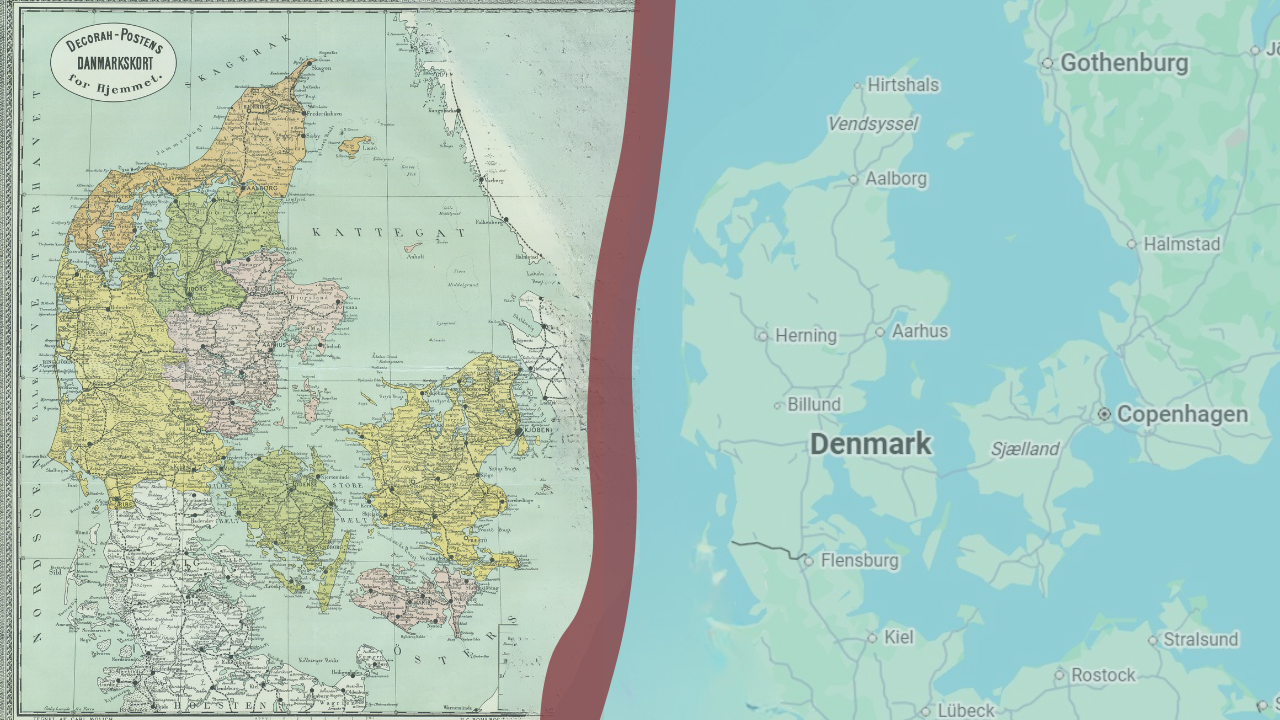
It was only a few weeks ago that Donald Trump’s ambitions regarding Greenland once again became a subject of discussion. At the same time, news of Russia’s war, European rearmament, and the rise of the AfD in Germany dominates the front pages. As international uncertainty grows, debates about the Danish Realm, Danish values, cultural heritage, and national identity flare up as well.
This is nothing new. Quite the opposite. When societies are faced with uncertainty, they often turn to the past. Not necessarily to find answers, but to find stories that can create coherence and meaning in a world that suddenly seems less secure.
History, and therefore the past, is not simply something that remains passively in the background. It is something we use. History is a tool, and it has been so for centuries.
The Past as a Point of Reference
From a Danish perspective, the ways in which we have retold the Middle Ages offer an obvious example of this. The Renaissance created the idea of the Middle Ages as a dark period of transition and used it to define itself as modern. The Enlightenment criticised the Middle Ages as irrational, while simultaneously collecting the sources and stories that would later be used to construct a national history. Where the Renaissance saw a dark interlude, Romanticism saw a lost paradise and built stories of people, king, and fatherland upon its foundations. Later, the Symbolists turned to the same Middle Ages as a spiritual refuge from modernity.
The Hero, the Villain, and the Messy Reality
Interestingly, the character of history always changes depending on who is telling it. This may seem self-evident, but it remains remarkable how often entire societies reshape the past to suit the needs of the present.
Richard the Lionheart and Prince John, for example, are not merely historical figures. They are also stories. Stories that, at different points in time, have been used to illustrate what a good and a bad ruler look like. Shakespeare and Disney may not have agreed on much, but they did agree on one thing: Richard was to be the hero and John the villain, even though the historical reality was considerably more complicated.
In times of uncertainty, societies rarely need complicated stories. They need points of reference. Stories that can connect an uncertain present with a more comprehensible past and a future that has yet to take shape.
Richard the Lionheart and Prince John did not survive in cultural memory because every detail of their stories was true. They survived because they fulfilled a need.
And that may be the most important point: stories that help us understand ourselves are often more powerful than the messy reality from which they emerge.
When Society Searches for Itself
This mechanism is not limited to English kings. When illness, death, or succession affects royal families, as has recently been the case in Norway, public discussion is rarely limited to the individuals directly involved. Suddenly, centuries of history are brought to the fore. Lines of succession, dynasties, national narratives, and ideas about the continuity of the realm all become part of the discussion.
Likewise, when debate about the Danish Realm flares up, we rarely discuss only Greenland’s economy or Denmark’s security interests. We also draw on stories about the history of the realm, a shared past, and ideas about who we are as a community. In other words, we are not only discussing politics. We are also discussing the stories we tell about ourselves.
The same pattern can be found beyond major geopolitical questions. When the latest PISA results prompted concern about Danish public schools, the discussion quickly came to involve more than test scores. Politicians called emergency meetings, experts searched for explanations, and the debate began to revolve around what had gone wrong.
But just as quickly, we began to look backwards. When did we lose the good school? What did we once do differently? What have we abandoned along the way? Here, too, we begin searching for explanations in stories about who we once were in order to understand more clearly who we have become.
Stories That Can Carry Us Forward
Debates about Greenland, European security, Danish values, the role of the monarchy, or the future of public education are rarely concerned only with the specific issue at hand. They are also about a society searching for itself. At a time when alliances are being challenged, borders are being debated, and Europe’s future appears less certain, a need arises for stories that can create continuity between past, present, and future.
Perhaps this is why history occupies so much space at this particular moment, even if we do not always notice it. When we ask what is happening to public education, the Danish Realm, or European security, we are also asking who we are.
We do not turn to the past because we wish to live in it. We turn to it because we are searching for something that can carry us forward.
When the world falters, we turn to the past. Not because the past has changed, but because the future has. That is why it is worth asking which stories we choose to carry forward with us.
Continue reading
Sample article: Reading the past through images ↗